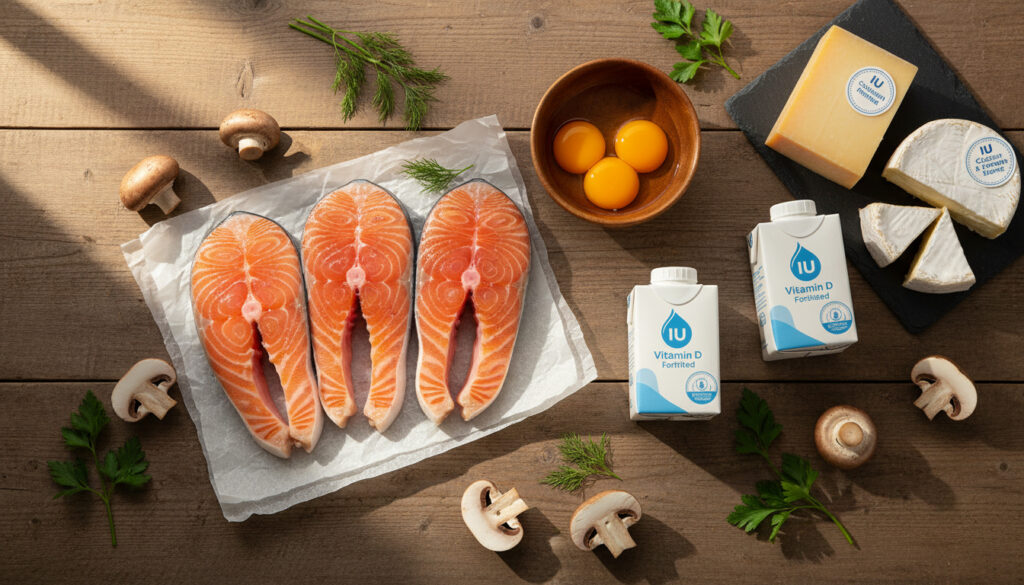
Foods High in Vitamin D – Top Sources and IU Amounts
Vitamin D deficiency affects an estimated one billion people globally, yet this essential nutrient remains notoriously difficult to obtain through diet alone. Unlike other vitamins, vitamin D functions as a hormone in the body, regulating calcium absorption and supporting immune function. The challenge stems from evolutionary biology: few foods naturally contain significant amounts, leaving humans historically dependent on sunlight exposure for synthesis.
Modern lifestyles have disrupted this ancient mechanism. Indoor work, widespread sunscreen use, and geographic constraints have created a paradox where dietary sources matter more than ever. Understanding which foods actually deliver meaningful amounts requires distinguishing between natural sources, fortified products, and persistent myths about plant-based options.
Fatty fish dominate the landscape of Top Animal-Based Sources of Vitamin D, while vegans must rely on specific fortified products or UV-exposed fungi to meet daily requirements.
What Foods Are Highest in Vitamin D?
Fatty fish (salmon, herring)
15 mcg (600 IU) for adults
UV-exposed mushrooms
Requires dietary fat
Fatty fish provide the most concentrated natural dietary vitamin D available. Cod liver oil leads all food sources with approximately 250 mcg per 100g, delivering 1,500 IU per tablespoon according to nutritional analysis. Herring and sardines follow closely at 1,600 IU per 100g when canned, while wild-caught salmon ranges from 400 to 1,000 IU per 100g depending on season and habitat.
Several key factors influence these values:
- Wild-caught salmon contains up to 250% more vitamin D than farmed varieties
- Fat-soluble vitamin D concentrates in fatty tissues, making oily fish superior to lean white fish
- Canned fish retain vitamin D stability during processing and storage
- Beef and calf liver provide meaningful amounts, though precise quantification varies
- Egg yolks contain approximately 88 IU per two-egg serving
- Fatty pork cuts like spareribs provide 88 IU per 100g due to vitamin D’s fat-soluble nature
| Food | Vitamin D (mcg/100g) | Serving Size | % Daily Value |
|---|---|---|---|
| Cod liver oil | 250 | 1 tbsp | 1,250% |
| Herring (canned) | 40 | 100g | 200% |
| Sardines | 40 | 100g | 200% |
| Salmon (wild) | 10-25 | 100g | 50-125% |
| Mackerel | 16 | 100g | 80% |
| Tuna (canned) | 6 | 100g | 30% |
| Egg yolks | ~2 | 2 large | 10% |
| Beef tenderloin | 1.5-2 | 100g | 8-10% |
Best Vegan and Plant-Based Sources of Vitamin D
The plant kingdom offers limited natural vitamin D options, creating distinct challenges for vegan diets Plant-Based and Vegan Sources of Vitamin D require careful selection between UV-treated fungi and fortified processed foods.
UV-Exposed Mushrooms
Mushrooms exposed to ultraviolet light stand as the only significant natural plant source. Chanterelles and UV-treated varieties contain 150-450 IU per 100g, though they provide vitamin D2 rather than the more bioavailable D3 found in animal products. Nutritional data indicates that D2 raises blood levels less effectively than D3, requiring larger quantities to achieve similar physiological effects.
Fortified Plant Milks and Cereals
Fortified soy and almond milk provide approximately 144 IU per cup, representing the most reliable vegan dietary source outside supplements. Fortified breakfast cereals offer similar values, though brands vary significantly in their enrichment levels.
Consuming vitamin D with dietary fat increases absorption by 30-50%. Vegan sources should be paired with nuts, seeds, or avocado to maximize uptake.
Why Most Produce Falls Short
Unexposed mushrooms, fruits, and vegetables contain negligible vitamin D. Analysis confirms that standard agricultural produce lacks the sterol precursors necessary for vitamin D synthesis, making fortification essential for plant-based diets.
Fortified Dairy and Common Foods with Vitamin D
Dairy products naturally contain minimal vitamin D unless fortified. This distinction creates confusion among consumers who assume milk provides inherent nutritional benefits beyond calcium and protein.
Milk and Yogurt
Fortified cow’s milk and yogurt typically deliver 80-100 IU per serving, representing the primary dietary source for many populations. Documentation shows that fortification began in the 1930s to combat rickets, transforming dairy from a negligible source to a significant contributor of daily intake.
Cheese Limitations
Natural cheese provides only 24-50 IU per slice, insufficient to meet daily requirements without consuming impractical quantities. Fortified cheeses exist in limited markets but remain uncommon.
Vitamin D content in fortified foods varies by country and brand. Check nutrition labels, as some plant milks contain 40% more vitamin D than dairy equivalents.
How Much Vitamin D Do You Need from Food?
The Recommended Dietary Allowance varies by life stage and physiological status. General guidelines indicate that most adults require 600 IU (15 mcg) daily, increasing to 800 IU (20 mcg) for individuals over 70. Pregnant and lactating women fall into higher requirement categories.
Meeting these targets through food alone presents logistical challenges. A single 100g serving of wild salmon provides 100% of daily needs, yet farmed salmon may deliver only 40%. Regular consumption of fatty fish twice weekly, combined with fortified foods or strategic sun exposure, typically maintains adequate serum levels for most adults.
Individuals with limited sun exposure, darker skin pigmentation, obesity, or malabsorption disorders require higher dietary intake or supplementation to maintain adequate 25(OH)D levels.
How Vitamin D Was Discovered
The identification of vitamin D followed the elimination of rickets as a public health crisis. In the 1920s, researchers Elmer McCollum and Marguerite Davis isolated the substance while studying cod liver oil’s curative properties. By 1930, chemical synthesis enabled food fortification, particularly of dairy products.
- : Vitamin D officially isolated from cod liver oil, documenting historical nutrition research
- : Industrial synthesis begins, enabling mass fortification
- : US public health programs initiate voluntary milk fortification
- : Mandatory fortification adopted in UK and US to prevent wartime deficiencies
- : Institute of Medicine establishes first formal RDAs
What We Know vs. What Remains Unclear
| Established Facts | Persistent Myths or Uncertainties |
|---|---|
| Fatty fish provide the richest natural dietary sources of vitamin D3 | Fruits contain vitamin D (false—no fruits naturally contain significant amounts) |
| Adults require 600-800 IU daily depending on age | Vegetables are reliable sources (false—only UV-exposed mushrooms qualify) |
| Milk requires fortification to contain meaningful vitamin D | All mushrooms provide adequate vitamin D (only UV-exposed varieties do) |
| Vitamin D2 from plants is less potent than D3 from animals | Cheese provides sufficient daily amounts (reality: 24-50 IU per slice) |
Why Vitamin D Matters
Vitamin D operates as a steroid hormone precursor, influencing over 1,000 genes throughout the body. Beyond bone health, researchers continue investigating its role in immune modulation, inflammatory response, and cellular differentiation.
The fat-soluble nature of vitamin D creates unique dietary requirements. Nutritional analysis demonstrates that absorption increases substantially when consumed with dietary fat, explaining why fatty fish outperform lean cuts of meat or fortified skim products.
Geographic latitude significantly impacts synthesis potential. Populations living above 35 degrees north receive insufficient UVB radiation for cutaneous vitamin D production during winter months, increasing reliance on dietary sources.
What Research Reveals
Few foods naturally contain significant amounts of vitamin D, forcing most populations to rely on fortified foods, supplements, or strategic sun exposure to maintain adequate status.
— Nutritional analysis from clinical dietary research
Wild-caught salmon varieties demonstrate vitamin D concentrations up to 1,000 IU per 100g, while farmed Atlantic salmon typically contains 400 IU or less due to feed composition and reduced sun exposure.
— Comparative food analysis
Beef and pork contribute modest amounts through fatty cuts, with spareribs and organ meats containing higher concentrations than lean tenderloin.
Key Takeaways
Fatty fish remain the undisputed champions of dietary vitamin D, with cod liver oil, herring, and wild salmon providing sufficient amounts in single servings. For those avoiding animal products, UV-exposed mushrooms and fortified plant milks offer viable alternatives, though effectiveness varies. Most adults require 600-800 IU daily, a target achievable through strategic food selection but often requiring supplementation in high-latitude regions or during winter months. Top Animal-Based Sources of Vitamin D combined with fortified foods provide the most reliable path to adequate intake.
Common Questions
Are eggs high in vitamin D?
Egg yolks contain approximately 88 IU per two-egg serving, or about 10% of daily requirements. Pasture-raised chickens exposed to sunlight may produce eggs with higher concentrations than conventionally raised birds.
Which fruits have vitamin D?
No fruits naturally contain vitamin D. This common misconception likely stems from confusion with fortified orange juice, which manufacturers sometimes enrich with vitamin D.
Is milk naturally high in vitamin D?
Cow’s milk contains negligible natural vitamin D. The vitamin D found in milk results from mandatory or voluntary fortification programs initiated to prevent rickets.
Does cooking destroy vitamin D?
Vitamin D remains stable during cooking. Baking, grilling, or canning fish does not significantly reduce vitamin D content, making prepared and preserved fish reliable year-round sources.
How often should I eat fatty fish?
Consuming fatty fish twice weekly provides approximately 80% of weekly vitamin D needs for most adults. Varying species between salmon, mackerel, and sardines ensures diverse nutrient intake while managing mercury exposure.
Are fortified foods as effective as natural sources?
Fortified foods utilize vitamin D2 or D3 added during processing. D3-fortified foods match natural sources in bioavailability, while D2-fortified foods require approximately 1.5 times the dosage to achieve similar blood levels.
Do vegetables contain vitamin D?
Standard vegetables lack vitamin D. Only UV-exposed mushrooms contain meaningful amounts, classified separately as fungi rather than vegetables. Leafy greens, cruciferous vegetables, and root vegetables contain zero vitamin D.
More related posts
 IT Welcome to Derry – Release Date, Cast and Episode Guide
 Where to Watch True Detective – All Seasons on Max
 King Edward Confessor – Life Death and Legacy
 What Substance Is Tested for to See If Photosynthesis Has Occurred in a Leaf? – Starch Iodine Test Guide
 I Will Always Love You – Lyrics History and Legacy
 Tomasz Schafernaker – BBC Meteorologist and Turner-Inspired Artist
 Houses for Sale Durham – Buyer Leverage Builds 2025
 Nine Bodies in a Mexican Morgue Episodes – Complete Series Guide